Rom 4
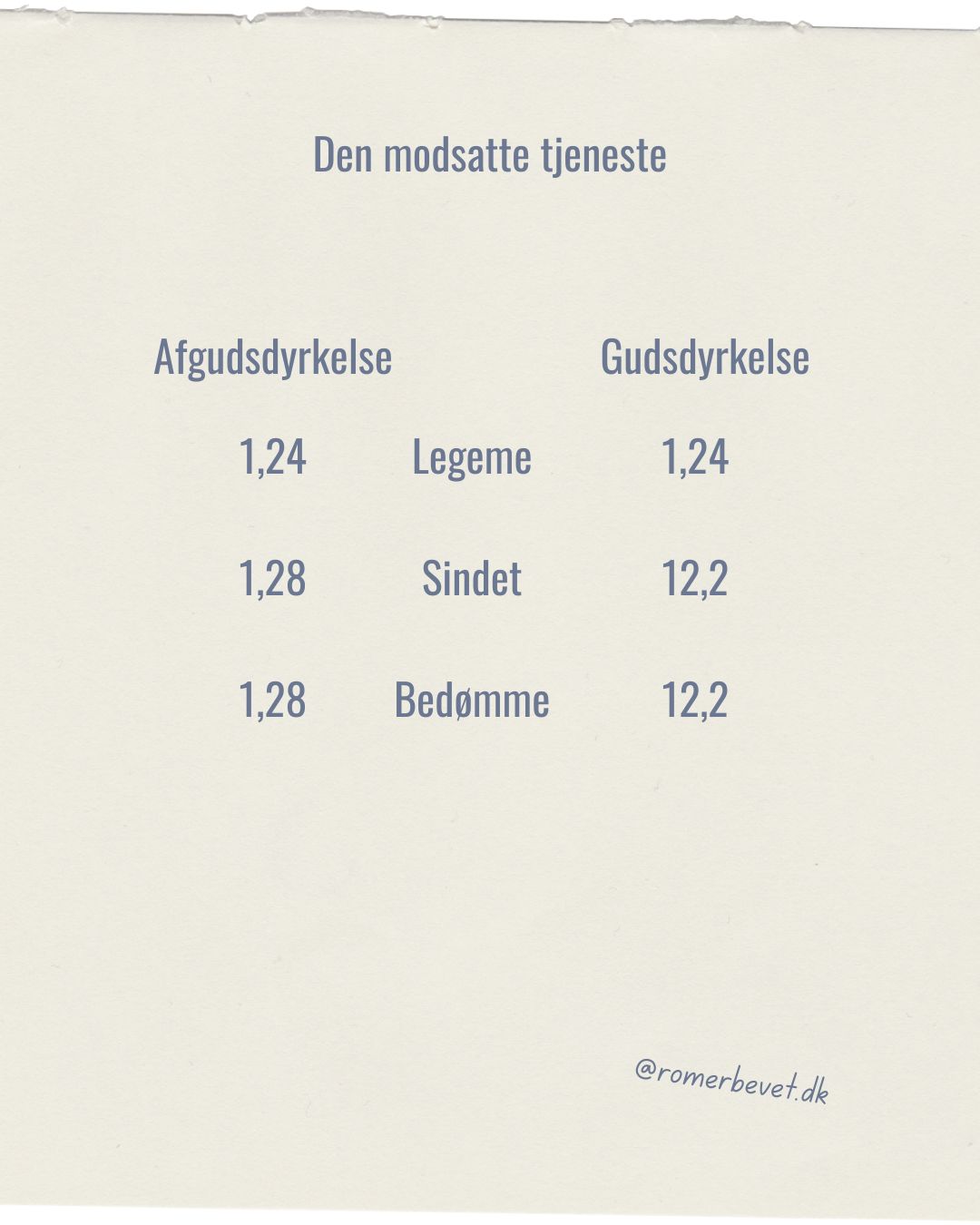
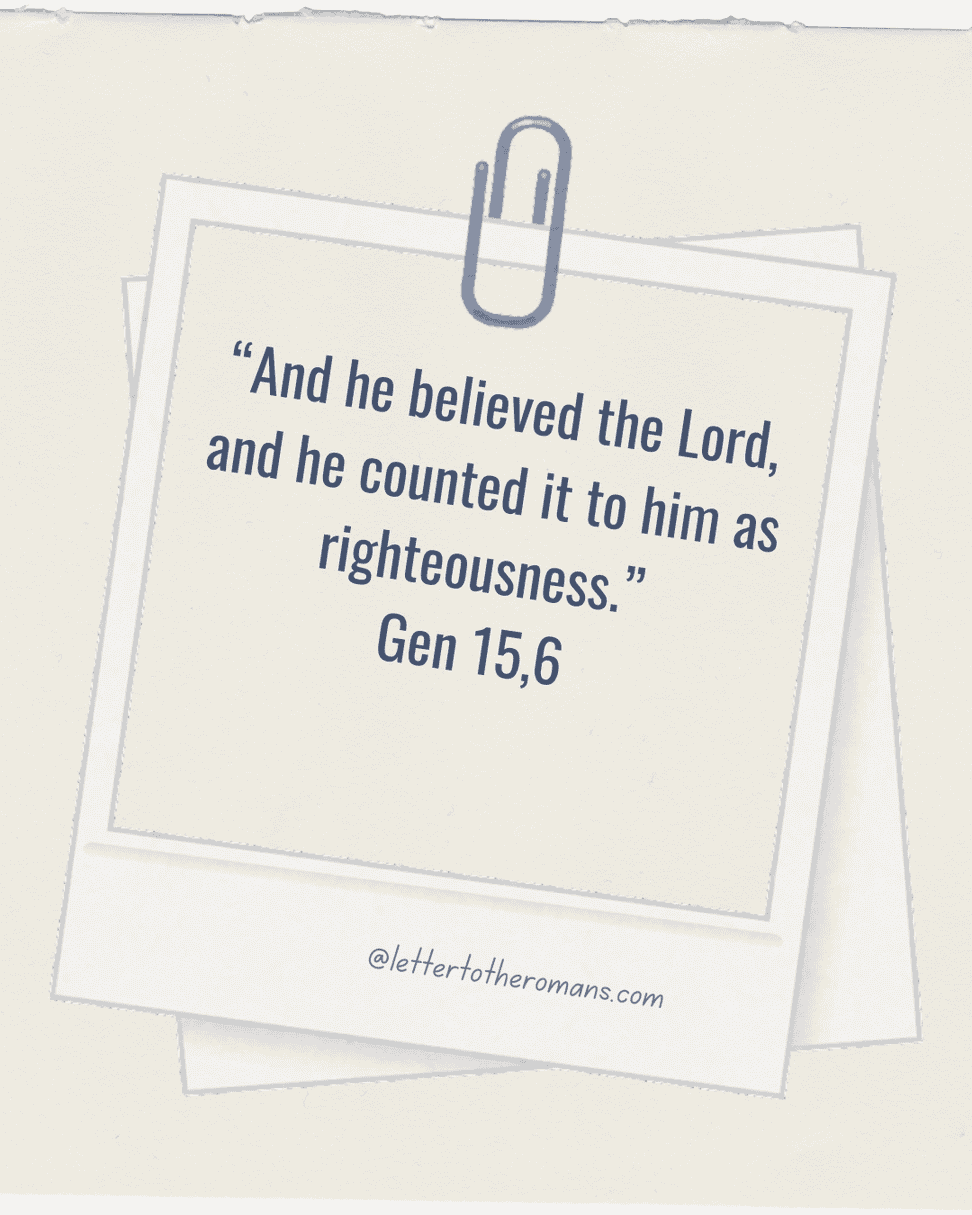
Abraham plays a major role in Judaism, and therefore Paul now turns his focus toward him. He does so again later in the letter (Rom 9:6ff) and in the Letter to the Galatians (Gal 3:6ff and Gal 4:21ff). What the four texts have in common is the question of who the true descendants of Abraham are. The theme of righteousness by faith is central in the passage. This is evident from the frame Paul sets up: 4:3: “Abraham believed God, and it was counted to him as righteousness.” 4:22: “Therefore it was also counted to him as righteousness.”
This frame concludes in verse 25: 4:25: “raised for our justification.” Paul does several things here. First, he shows that Abraham was made righteous by faith and not by works. Then he points to when Abraham was made righteous. The point is that it happened before his circumcision. But what, then, is the purpose of circumcision? It is a seal and a sign from God to Abraham — not the other way around. From circumcision Paul moves directly to the question of the law (vv. 13ff). He sets the law in contrast to faith and ends by unfolding the nature of faith: Faith grasps God’s promises. With verse 22 the circle of righteousness is completed.
Faith (vv.1-3)
The statement in verse 2 – “If Abraham was justified by works, he has something to boast about, but not before God” – reaches directly back to the end of chapter 3, where faith and boasting were likewise set up as opposites.
In 3:20 Paul emphasized that no one is justified by works of the law, and in 3:28 that we hold that a person “is justified by faith, apart from works of the law.”
Paul finds his first argument against the idea that Abraham was justified by works in Genesis 15:6. Preceding the quotation is a conversation in which God promises Abraham that he will have many descendants (Gen 15:5). Paul uses the same quotation in Gal 3:6, where he likewise underscores the decisive significance of faith.
In a certain sense, Romans 4 can be seen as an exposition of Genesis 15:6. Paul returns to the verse several times (v. 9, v. 10, v. 11, and v. 22) and unfolds the expressions “faith” and “reckon/credit,” both of which have their roots in Genesis 15:6. *